

CAGE-FREE VS. FREE-RANGE
TAKING THE CONFUSION
OUT OF EGG-SPEAK
Key Takeaways:
- Cage-free eggs come from hens that live indoors without cages, while free-range hens also have access to outdoor areas.
- Outdoor access allows free-range hens to forage naturally, which can slightly boost omega-3s, antioxidants, and vitamins in their eggs.
- Understanding egg labels helps you support animal welfare, sustainable farming, and nutritious, responsibly raised eggs.
Standing in the egg aisle can be confusing. “Cage-free,” “free-range,” “pasture-raised” — what do these labels really mean? At the heart of it, they describe how hens live and eat, and those differences can affect not only the welfare of the birds but also the nutrition and quality of the eggs you bring home.
Let’s break it down in a way that’s easy to understand.
Cage-Free Eggs: Life Inside the Barn
Cage-free hens aren’t trapped in tiny wire cages like in conventional systems. Instead, they live indoors in large barns or aviaries where they can move around, perch, dust-bathe, and lay their eggs in nesting boxes.
Most cage-free hens don’t go outside. Their diet comes mainly from a carefully balanced feed designed to give them all the nutrients they need to stay healthy and lay eggs consistently. Cage-free eggs are nutritious and reliable, with the same high-quality protein, vitamins, and minerals as conventional eggs.
Because cage-free systems are mostly indoors, farmers can manage large flocks efficiently, which usually makes these eggs more affordable and widely available year-round.
Free-Range Eggs: A Step Outdoors
Free-range hens get a little more freedom. They still live in barns, but they also have access to outdoor areas, often through small “pop doors” leading to soil, grass, or pasture. When outside, hens scratch, peck, dust-bathe, and forage for insects, seeds, and plants.

According to standards used by the U.S. Department of Agriculture (USDA), free-range chickens must have some access to outdoor areas. These outdoor spaces may include open ground, soil, or pasture where hens can experience fresh air and natural light.
Outdoor foraging can contribute to differences in an egg’s nutrient profile, although the results depend on the hens’ overall diet and farm practices. The flavor and yolk color may also be a bit richer, thanks to their varied diet.
Not all free-range farms are the same. Some offer only small runs with limited vegetation, while others provide pasture-like outdoor areas with vegetation where hens can forage and explore. Weather, season, and flock size all influence how much time hens actually spend outdoors.
Pasture-Raised Eggs: Maximum Freedom and Nutrition
Pasture-raised hens live mostly outdoors on large, grassy fields. They forage for insects, seeds, and plants throughout the day, in addition to their feed. This lifestyle usually produces eggs with deeper golden yolks and higher levels of omega-3 fatty acids, antioxidants like lutein and zeaxanthin, and vitamins A, D, and E.
Pasture-raised systems can offer hens extensive outdoor space, but nutrition varies with factors such as feed and farm practices. The label alone does not guarantee a specific nutrient profile. Naturally, this level of care and space comes with higher costs, and pasture-raised eggs are usually found at farmers’ markets, local food co-ops, or directly from farms.
Comparing Price and Availability
Cage-Free: Most affordable, widely available year-round, produced in indoor barns.
Free-Range: Moderately priced, availability varies by season and region, hens get some outdoor time.
Pasture-Raised: Premium cost, often seasonal and local, hens roam large outdoor pastures.
Egg prices reflect the land, labor, and care required to raise hens with more freedom. If you want to support animal welfare and family farming, understanding the standards behind each label can help you choose eggs that fit your priorities.

The Biggest Difference Between Free-Range and Cage-Free Eggs
The primary difference between free-range and cage-free eggs is outdoor access.
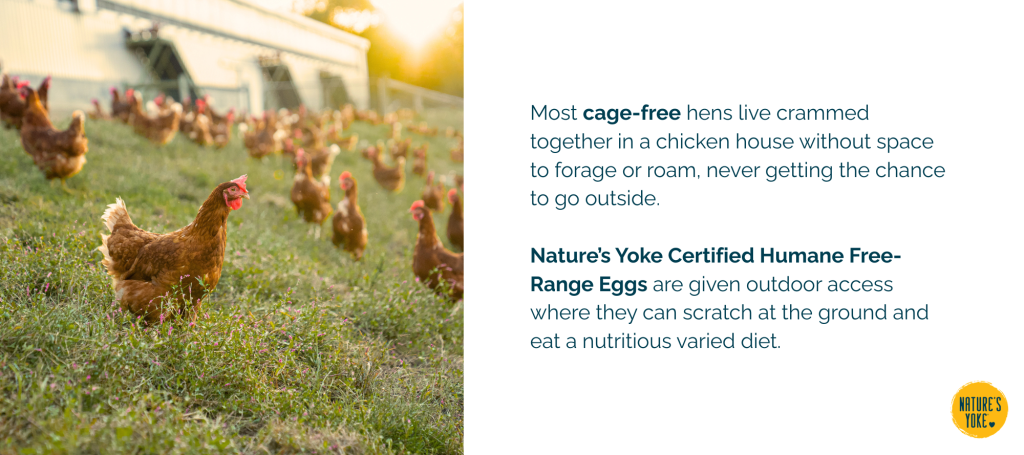
Cage-free hens live indoors in spacious barns without cages, which allows them to walk, stretch, perch, and engage in natural behaviors like dust-bathing and nesting. While this is a meaningful improvement over traditional caged systems, cage-free hens do not typically go outside, so their environment is limited to the indoor barn.
Free-range hens, on the other hand, live in similar indoor housing but are given regular access to the outdoors through pop doors that lead to pasture, soil, or open runs.
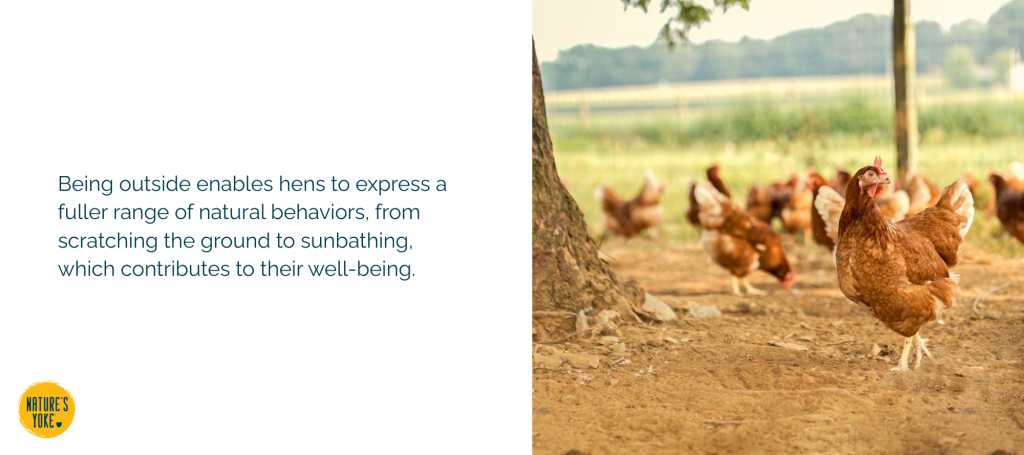
This outdoor access allows hens to explore, forage for insects, seeds, and plants, and spend time in the fresh air and sunlight. Being outside enables hens to express a fuller range of natural behaviors, from scratching the ground to sunbathing, which contributes to their well-being.
The size, quality, and usability of outdoor areas can vary significantly from farm to farm. On some operations, hens may have access to small runs or limited grassy spaces, while on others, including the Certified Humane family farms that partner with Nature’s Yoke, hens have access to pasture-like outdoor areas where they can forage and explore.
Weather, season, and flock size also influence how much time hens actually spend outdoors. Even so, free-range systems consistently provide a level of freedom and engagement with the environment that cage-free barns cannot replicate.
Ultimately, the difference between cage-free and free-range eggs is not just about where hens live, it’s about the opportunities they have to live naturally, explore, and forage. This difference can also influence the nutritional profile of their eggs, particularly when hens supplement their feed with natural outdoor foods.
Understanding this distinction allows consumers to make more informed choices that support hen welfare, responsible farming practices, and sustainable agriculture.
Do Free-Range Eggs Taste Different?
Taste differences between eggs are usually influenced more by the hen’s diet and farm practices than the label alone.
When hens have access to pasture and natural forage, their diet may include:
insects
seeds
grasses
small plants
This can sometimes influence the flavor and color of the egg yolk. However, results vary depending on how the farm manages outdoor areas and feed.
Are Free-Range Eggs Healthier Than Cage-Free Eggs?
Both cage-free and free-range eggs are nutritious sources of protein, vitamins, and minerals.
When hens spend time outdoors and forage for natural foods, their eggs may have a different nutrient profile. The specific differences depend on their feed and farm practices. Nature’s Yoke also offers Omega-3 Free-Range Eggs, from hens whose diets include flax.
Higher omega-3 fatty acids
More antioxidants
Potentially higher vitamin levels
These differences depend heavily on the farm’s management practices and the hen’s diet, so not all free-range eggs will be identical.

Cost and Availability: Free‑Range vs. Cage‑Free Eggs
When shoppers compare free‑range and cage‑free eggs in the grocery aisle, one of the first differences they notice is price, and availability can vary too.
These differences stem from how the hens are raised, the resources required to care for them, and how farms manage production throughout the year.
Why Free‑Range Eggs Often Cost More
Free‑range systems typically require more land, more labor, and more management than cage‑free operations. Because hens have outdoor access, farms need:
Larger parcels of land to support pasture and outdoor runs
Infrastructure to provide safe indoor shelter plus outdoor exits
Labor to manage pasture rotation, field maintenance, and forage areas
Weather‑appropriate shelter and protections from predators
All of these add to the cost of production. When a farm invests in quality pasture, fencing, natural forage areas, and ongoing maintenance, that investment is reflected in the price of the eggs.
In contrast, cage‑free barns are usually indoor systems, meaning:
Land requirements are smaller
Infrastructure focuses on a single enclosed space
Feed and environmental conditions can be more controlled
Labor is concentrated on indoor management rather than pasture care
This lower operational cost often results in cage‑free eggs being priced more affordably on the shelf.
Seasonal Availability Can Vary
Egg production itself is partly tied to natural cycles. Hens typically lay more eggs when daylight hours are longer ( in the spring and early summer) and fewer during shorter winter days. Some larger commercial farms use artificial lighting to maintain year‑round production, but smaller or pasture‑focused farms often allow hens to follow natural rhythms.
For free‑range producers that prioritize natural cycles and outdoor access, this means:
Seasonal dips in supply, especially in the winter
Availability that can vary by farm and region
Local supply sometimes selling out before restocking
This variability can make free‑range eggs harder to find at certain times of year and contributes to higher prices compared with cage‑free eggs, which are often produced in larger, year‑round indoor flocks.
Geography and Farm Scale Matter
Egg availability can vary by location and farm size. Urban stores often carry more options, while rural or small-town markets may stock mainly conventional or cage-free eggs.
Small family and pasture-based farms frequently sell directly at farmers markets, farm stands, or through CSA programs, making fresh free-range eggs accessible locally even if they aren’t widely found in grocery stores.
Why Egg Labels Matter
Egg labels help consumers understand how hens are raised, but they can only tell part of the story.
Some farms go beyond basic definitions to prioritize:
Animal welfare
Natural hen behaviors
Responsible land stewardship
Sustainable farming practices
Learning what labels mean allows you to make choices that align with the kind of food system you want to support.
Frequently Asked Questions
1. Are cage-free eggs the same as free-range eggs?
No. Cage-free hens live indoors without cages, while free-range hens also have access to outdoor areas.
2. Do free-range chickens actually go outside?
Yes, free-range systems provide outdoor access, though the amount of time hens spend outside can vary by farm and weather.
3. Which is better: cage-free or free-range eggs?
Both systems avoid cages, but free-range farms allow hens to experience outdoor environments and natural foraging.
4. Why are free-range eggs often more expensive?
Outdoor systems typically require more land, more management, and smaller flock densities.
5. Is there a better option than free-range eggs?
Pasture-raised and free-range describe different systems, and the best choice depends on the farming practices and standards that matter most to you. Nature’s Yoke partners with Certified Humane free-range family farms.
The Bottom Line
Free-range and cage-free eggs both represent steps away from traditional cage housing, but they are not the same.
Cage-free hens live indoors with room to move, while free-range hens have the additional benefit of outdoor access. For many farmers and consumers, that extra connection to the outdoors is an important part of raising hens more naturally.
Once you know what these labels mean, it’s easier to pick eggs that match how you want animals to be raised.
At Nature’s Yoke, we partner with family farms that raise Certified Humane free-range hens. Our hens have access to outdoor spaces with vegetation, along with indoor areas designed to provide room to perch, nest, and move comfortably. If you’re comparing egg labels, look beyond the words on the carton and learn what each standard means for the hens.

Cage-free vs free range
Do you have more questions about free-range vs. cage-free? Call or text us at 717-925-0171 or get in touch through our contact page. The differences between these types of eggs matter — and nothing makes us happier than talking with you about why.

WHERE TO FIND OUR
FREE-RANGE EGGS
Fully savoring life, love and latitude is only possible when you nourish your body. Our free-range eggs provide you with great protein and other nutrients that support your brain, eyesight and more.
HAS NATURE’S YOKE FOUND A
HOME IN YOUR COMMUNITY YET?
We can help you bring free-range eggs to all your neighbors.
Get our Please Carry Nature’s Yoke Request Letter and drop it by your favorite grocery store.

LIFE. LOVE. LATITUDE. JOIN OUR LIST.
Sign up to share stories, learn and exchange family recipes,
and belong to a community that SAVORS BEING TOGETHER.

